Why HBO Just Surprise-Dropped 'Welcome to Derry'
The Midnight Ambush: Why Max Skipped the Red Carpet
Halloween night at 9:00 PM Eastern. Most of us were sitting on our couches, dividing the leftover mini candy bars, or cycling through the usual rotation of 1970s slasher classics. Then my phone blew up with notifications from half a dozen industry contacts. Max didn't hold a glitzy premiere at the Chinese Theatre. They didn't schedule a coordinated blitz of morning talk show couch tours. Without so much as a warning tweet, the premiere episode of It: Welcome to Derry landed right on the Max homepage.
Crickets from the PR department beforehand. Zero warning.
In a media climate where studios usually choke our feeds with five distinct teaser trailers, sixteen character posters, and sponsored brand integrations eight months before a show premieres, this kind of stealth drop feels alien. It's the kind of move reserved for a Beyoncé visual album or a surprise Radiohead track back in 2007. Doing it with an expensive, prestige horror IP that Warner Bros. Discovery spent roughly $15 million an episode to produce? That takes serious guts—or raw panic about the upcoming quarter.
Running this platform independently on Dev Dominion gives us the freedom to call out studio shenanigans without a corporate press relations team breathing down our necks, and looking at the raw server traffic spikes the second the episode went live tells its own story. Max knew exactly what they were doing. They weaponized cultural FOMO on the single night of the year when horror commands the entire internet.
The Streaming Math: Combatting Post-October Churn
Let's talk about the business side, because television executives don't make reckless scheduling calls out of artistic whimsy. Casey Bloys and his team at HBO and Max have been staring down a very specific calendar threat: the November cliff. Every year, streaming services witness a surge of subscriptions in September and October as casual viewers hunt down Halloween content. The second November 1st hits, those same viewers cancel their tiers before the Christmas holiday push kicks into gear.
Streaming churn is a ruthless beast. If Max launched Welcome to Derry with a standard, polite premiere in late November, they would have missed the cultural seasonal peak. By sneaking the pilot onto screens precisely when every horror fan was actively hunting for something terrifying to cap off Halloween, they hijacked the entire weekend conversation. You didn't plan on keeping your Max subscription active through Thanksgiving? Well, tough luck—now you're hooked on a nine-episode weekly mystery set in the most cursed town in Maine.
Consider the competitive landscape right now:
- Netflix has leaned heavily into cozy seasonal comfort programming, leaving a gaping void for hardcore, prestige R-rated terror.
- Prime Video and Apple TV+ are pouring hundreds of millions into sprawling sci-fi epics, but neither platform has established a foothold in visceral supernatural horror.
- Disney+ keeps its seasonal offerings squarely inside the family-friendly PG-13 sandbox, leaving adult genre enthusiasts wandering without a destination.
Max stepped into an empty arena. They dropped an unrated, blood-soaked hour of television right as audiences were most hungry for it. It was opportunistic, slightly chaotic, and undeniably brilliant counter-programming.
The Pilot Review: 1962 Derry Is Bleak, Brutal, and Suffocating
Now, let's address the elephant in the sewer: is the actual episode any good? Or did Max rely on a surprise drop to mask a creative dud?
I went into this premiere with heavy skepticism. Prequels are notorious minefields. We have all endured origin stories that explain away the mystery of iconic monsters until every ounce of fear evaporates into mundane trivia. Nobody wanted an entire season explaining where Pennywise bought his silver clown suit.
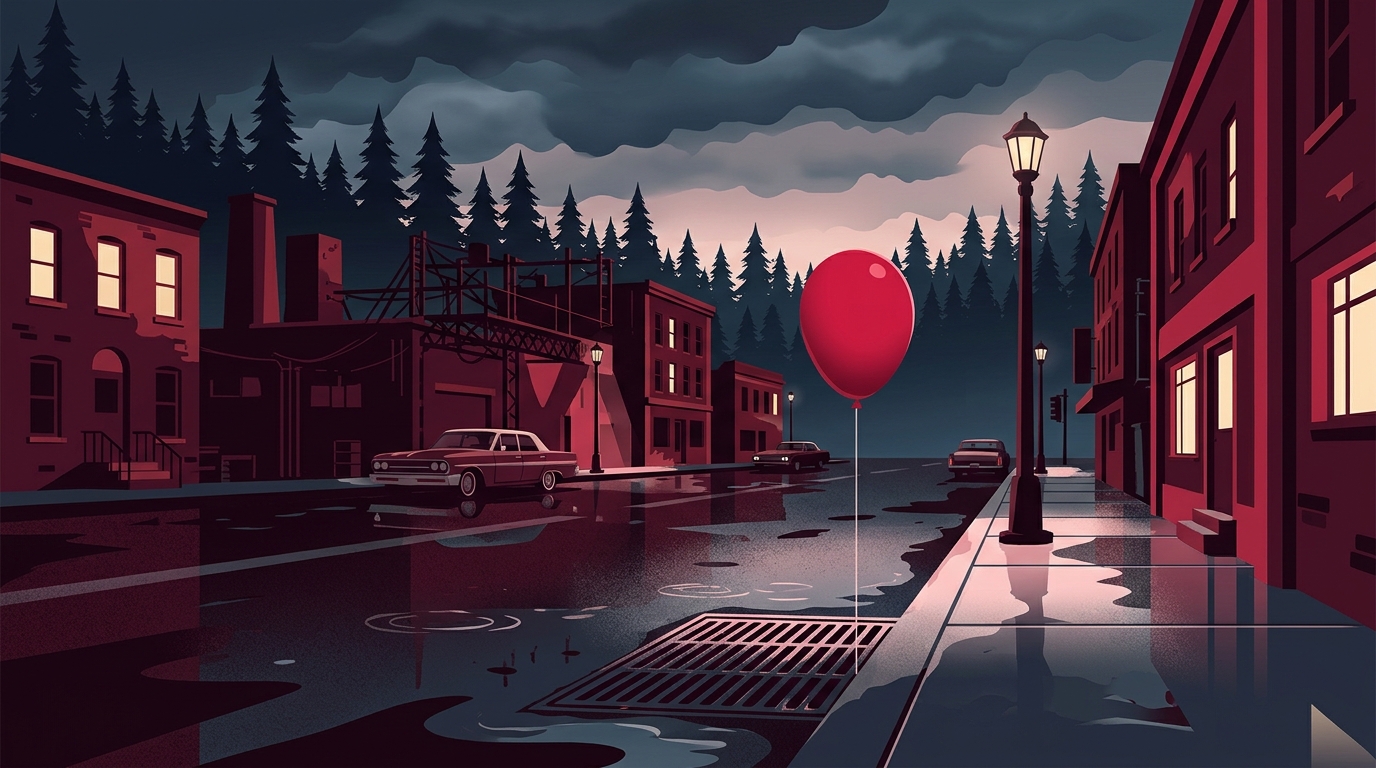
Thankfully, director Andy Muschietti didn't fall into that trap. Muschietti returned to helm the pilot, and his visual style is unmistakable from the opening tracking shot. The episode plunges us into Derry, Maine, circa 1962. This isn't the nostalgia-tinted, golden-hour 1960s of classic television. Derry is cold, wet, industrially diseased, and deeply hostile.
The pilot focuses on the tension surrounding the establishment of a local air force installation, bringing a wave of new families into a town that fundamentally despises outsiders. Jovan Adepo and Taylour Paige lead the ensemble, and their performances anchor the narrative with immediate weight. Paige, in particular, delivers a masterclass in quiet anxiety. She plays a woman who recognizes almost immediately that the rot in Derry isn't just civic neglect—it's something spiritual, ancient, and hungry.
The cinematography leans hard into slate-gray skies, rusting metal, and sickly amber interior lighting. When the horror hits, it hits with shocking physical impact. We aren't getting cheap digital jump scares where a loud violin screech tries to make you drop your popcorn. The terror here is slow, spatial, and grotesque. A scene set in an abandoned gravel quarry midway through the episode delivers one of the most unsettling pieces of practical creature work I've seen on television since the early seasons of Hannibal.
The $1.2 Billion Shadow: Expanding Stephen King’s Darkest Footnotes
To truly understand why this show exists, you have to look at the box office history. When Andy Muschietti’s IT: Chapter One hit theaters in September 2017, it completely exploded industry projections. The film pulled in an astonishing $123.1 million in its domestic debut—shattering the record for the biggest horror opening of all time—before marching to a gargantuan $704 million worldwide finish. Two years later, IT: Chapter Two added another $473 million to the tally.
Together, those two films generated over $1.17 billion in global ticket sales. In Hollywood economics, an intellectual property pulling those numbers doesn't get retired to the vault. It gets turned into a franchise machine.
Yet the movies faced an insurmountable structural hurdle: Stephen King’s original 1986 novel spans 1,138 pages of non-linear cosmic horror. To make the theatrical films functional, the writers had to discard the book's richest, most disturbing material—the historical interludes. Throughout the novel, King periodically halts the modern narrative to present Mike Hanlon's historical journals documenting Derry's recurring 27-year cycles of bloodshed:
- The 1908 Kitchener Ironworks explosion that slaughtered over a hundred town children during an Easter egg hunt.
- The 1929 shootout where the Bradley Gang was executed in broad daylight while ordinary townsfolk watched from shop windows in passive trance.
- The 1962 burning of the Black Spot, an underground nightclub targeted by a local white supremacist legion while an ancient evil stoked the flames.
This is where Welcome to Derry finds its creative justification. The show isn't spinning empty wheels or manufacturing artificial stakes. It is adapting the darkest, most politically charged chapters of King's text that a two-hour studio feature simply had no room to explore. By tackling the 1962 cycle, the series explores how Pennywise doesn't simply slaughter people with teeth and claws; the entity poisons human minds, amplifying real-world bigotry, paranoia, and cowardice until the town tears itself apart from within.
Bill Skarsgård’s Looming Shadow
Let's address the question everyone kept asking throughout the episode: where was Bill Skarsgård? The Swedish actor’s portrayal of Pennywise the Dancing Clown defined modern genre iconography alongside Robert Englund’s Freddy Krueger and Doug Bradley’s Pinhead. While Skarsgård is officially attached to the series as both an executive producer and returning cast member, the pilot wisely holds him back.
We catch fleeting glimpses. An impossible silhouette standing against the tree line. A distorted voice echoing from an irrigation pipe. A warped carnival tune bleeding into a radio broadcast. Holding Pennywise in reserve proves that the showrunners understand narrative discipline. If you unleash the clown in the first ten minutes, the dread collapses into an action chase sequence. By keeping the entity in the shadows, the town itself becomes the monster.
Audience Fractures: Why Critic Reviews and Fan Hype Will Collide
Predicting audience reactions in this niche is part of our bread and butter, and I can already see the fault lines forming across social media. Casual viewers who expected a light, energetic, Stranger Things-style adventure full of snappy quips from precocious kids on bicycles are going to be thoroughly unsettled. This pilot is oppressive. It deals directly with systemic racism, municipal corruption, and unrelenting psychological dread.
Film critics, on the other hand, are going to praise the sheer craft. Muschietti and showrunner Jason Fuchs have shot this on high-end glass with cinematic aspect ratios and genuine location texture. The production design avoids the sterile, flat digital sheen that plagues so many contemporary streaming originals. You can practically smell the damp autumn mud and the stale cigarette smoke in the police precincts.
Here is what we should watch closely over the coming weeks:
- Pacing sustainability: Setting up an atmospheric mystery in a pilot is one thing; sustaining tension over eight additional hours without descending into repetitive filler is a notorious streaming hazard.
- Lore expansion: Will the show delve into the Macroverse and the cosmic origins of the entity, or will it ground the horror purely within local Maine folklore?
- Weekly viewership retention: Now that the Halloween surprise has landed, can Max convert curiosity clicks into consistent Sunday night viewing habits throughout November and December?
The Verdict: An Unapologetic Statement of Intent
Dropping It: Welcome to Derry on Halloween night without an advance PR campaign was a calculated roll of the dice. It bypassed the cynical cycle of pre-release trailer dissection and forced audiences to judge the work purely on its own merits in real time. That rarely happens in modern Hollywood, and we should celebrate the sheer novelty of it.
The pilot episode is confident, visually rich, and deeply disturbing. It treats Stephen King’s source material not as a superficial toy box of jump scares, but as a serious psychological examination of collective guilt and inherited evil. Max just threw down the gauntlet for high-budget streaming horror. If the remaining episodes maintain the pilot's icy nerve and thematic ambition, we aren't just looking at a seasonal distraction—we're looking at the definitive genre television event of the year.